UEMF hosts an international scientific outreach project on antimicrobial resistance and the fight against superbugs
UEMF hosts an international scientific outreach project on antimicrobial resistance and the fight against superbugs
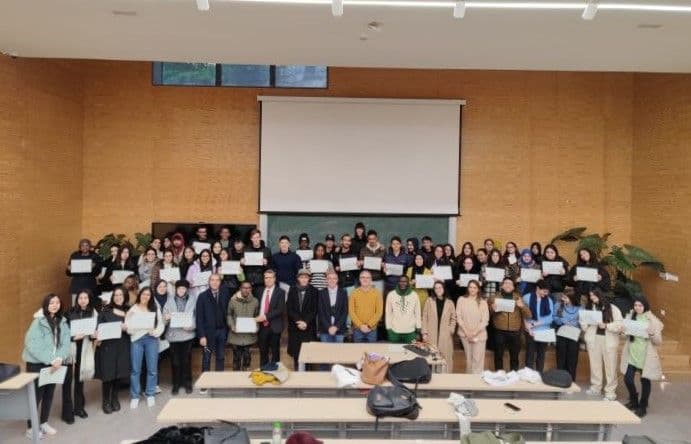
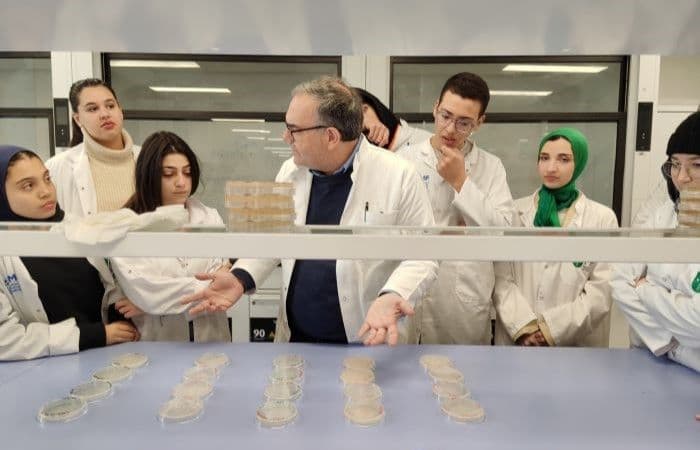
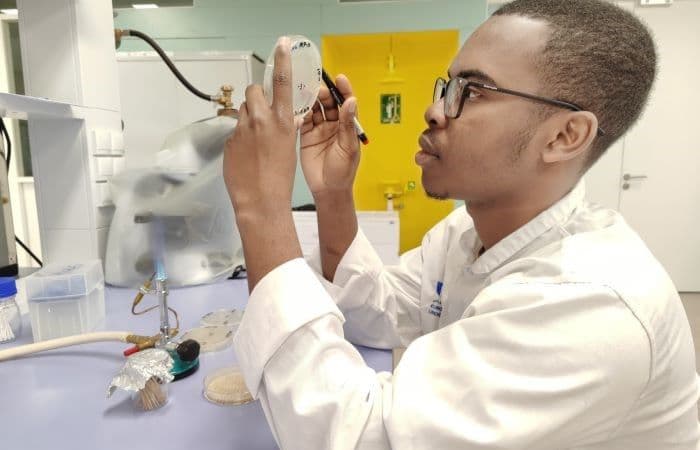
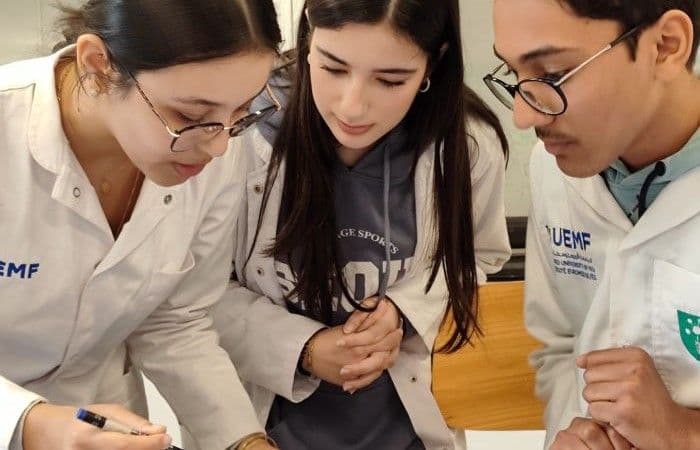
Micromonde, an international project developed in seventeen countries to bring scientific culture and biomedical research closer to different educational levels and to promote research careers, concluded its first edition on the campus of the Euromed University of Fes (UEMF), with the participation of more than 100 students. During the last week, university students from the Pharmacy, Biomedical Engineering and Biotechnology programs, as well as faculty from UEMF’s Health Hub and the Department of Microbiology and Ecology at the University of Valencia (Spain), supervised experiments aimed at discovering new bacterial strains that produce antibiotics.
Nearly 100 students from the Euromed Faculty of Pharmacy and the Euromed School of Biomedical and Biotechnological Engineering underwent specific training on the program. Five practical sessions were conducted, alternating with theoretical instruction during which students acquired knowledge about the problem of bacterial resistance to antibiotics and its socio-economic impact, while learning different experimental methodologies.
This project-based learning (PBL) initiative is a different way of teaching that helps students think critically, work together and actively solve problems.
Visiting professor M. Sergi Maicas (project coordinator at the University of Valencia with Professor Belén Fouz) and Prof. Ismail Moukadiri (Project Coordinator at Euromed University) participated in the closing ceremony, along with various UEMF officials, the Vice-President in charge of Research, Innovation and Partnerships, Prof. Salim Bounou, the Vice-President in charge of the Health Hub, Prof. Chakib Nejjari, and the Dean of the Faculty of Pharmacy, Prof. Samir Ahid.
Small World Initiative is an international scientific project that emerged at Yale University (United States) in 2012 as a strategy to encourage young people’s interest in scientific research and to address an urgent health problem such as the need to find new effective antibiotics against infectious diseases. Its success in its country of origin led the project to expand to many countries in subsequent years.
International consortia
The UEMF-MicroMondeMaroc project (UEMF-3M) implemented international projects (Small World Initiative, Tiny Earth) as well as Spanish-Portuguese projects (MicroMundo) for the first time in Morocco. The project is funded by UEMF. Professor Sergi Maicas participated thanks to cooperation support RI_IP_3186424 from the University of Valencia. The Micromundo project in Spain is supported by the Spanish Society of Microbiology and the National Plan on Antibiotic Resistance, and its dissemination is ensured by the Science Culture Unit - Scientific Outreach Chair of the University of Valencia.