Doctoral Thesis Defense in Materials Science and Modeling by Ms. Nidal EL BIYARI
Doctoral Thesis Defense in Materials Science and Modeling by Ms. Nidal EL BIYARI
Euromed University of Fes (UEMF) is pleased to inform the public of the
doctoral thesis defense in ” Materials Science and Modeling ”
The thesis defense will take place on Saturday January 18, 2025 at 10:00 at UEMF
Location: Gallery/building 1
The thesis will be presented by Ms. Nidal EL BIYARI
Under the title:
“ Design, Modeling and Realization of Optofluidic Sensors Based on Surface Plasmon Resonance for Precision Sensing. ”
Abstract
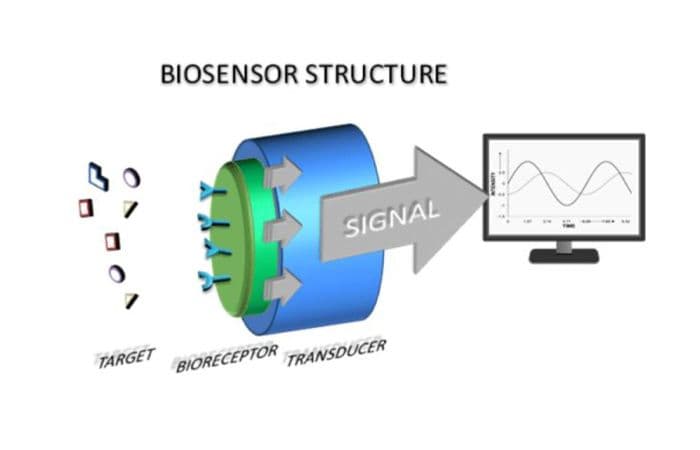
This thesis focuses on the development of high-performance optofluidic biosensors based on the surface plasmon resonance (SPR) phenomenon. A novel golden ratio approach was proposed to optimize the geometric properties of a gold-silver bimetallic configuration, achieving rapid optimization with enhanced sensitivity and resolution.
Additionally, a dual-mode plasmonic configuration combining guided modes in a dielectric waveguide and plasmonic modes on a gold film was studied. This configuration generates a detection mode (PIT) with high performance and a reference mode (TM1) to improve measurement reliability by minimizing false positives.
Finally, a new approach for microfluidic system fabrication using stereolithography additive manufacturing was developed, integrating real-time temperature control. This method improved the mechanical and structural properties of microfluidic chips, making them highly suitable for biosensing applications, as confirmed by microscopic analyses and mechanical tests.
Keywords:
Surface Plasmon Resonance (SPR), Plasmon Induced Transparency (PIT), Bimetallic Configurations, Biosensing Applications, Microfluidic Systems, Additive Manufacturing..
Abstract
This thesis focuses on the development of high-performance optofluidic biosensors based on the surface plasmon resonance (SPR) phenomenon. A new golden ratio approach was proposed to optimize the geometric properties of a gold-silver bimetallic configuration, allowing rapid optimization with increased sensitivity and resolution.
Furthermore, a bimodal plasmonic configuration combining guided modes in a dielectric waveguide and plasmonic modes on a gold film was studied. This configuration generates a high-performance detection mode (PIT) and a reference mode (TM1) to improve measurement reliability by minimizing false positives.
Finally, a new approach for manufacturing microfluidic systems using stereolithography additive manufacturing has been developed, integrating real-time temperature control. This method improved the mechanical and structural properties of microfluidic chips, making them well suited for biodetection applications, as confirmed by microscopic analyses and mechanical tests.
This thesis will be presented before the jury members:
| Last name and First name | Institution | Position |
|---|---|---|
| Pr. KHALIS Mohammed | Moulay Ismail University, Meknes | President |
| Pr. SAHRAOUI Bouchta | University of Angers, France | Rapporteur |
| Pr. ERGUIG Hassane | Ibn Tofaïl University, Kenitra | Rapporteur |
| Pr. SALI Ahmed | Sidi Mohamed Ben Abdellah University, Fès | Rapporteur |
| Pr. El OUAZZANI Ech CHAHDI Amal | Euromed University of Fes | Examiner |
| Pr. ALAOUI Chakib | Euromed University of Fes | Examiner |
| Pr. SAFOUANE Abdellatif | Euromed University of Fes | Thesis Supervisor |
| Pr. ZEKRITI Mohssin | Euromed University of Fes | Co-supervisor of the Thesis |