Reinventing value chains, an opportunity for Morocco
Reinventing value chains, an opportunity for Morocco
China coughed and the world caught a cold. The fulfillment of this prophetic metaphor during the COVID-19 pandemic brings us back to a disenchanted reality of globalization and the global value chains that organize the design, production and circulation of manufactured goods. Over the last thirty years, the structuring of global value chains (GVCs) has been guided by the belief that advances in logistics technologies would increasingly ensure the control of costs, lead times and risks of value chains spread over ever more distant geographic areas.
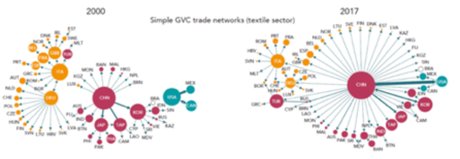
If this production model has undeniably allowed, on the one hand, to free up consumers' purchasing power by reducing the acquisition cost of goods and services and, on the other hand, to ensure the economic emergence of some developing countries, it is not without criticism. By encouraging the development of GVCs, public policies and industrial strategies in many countries have orchestrated their dependence in major sectors such as automotive, textiles, electronics or, more worryingly, the pharmaceutical and health industries. The Global Value Chain Development Report 2019 of the WTO and World Bank shows how value chains have massively structured around a central actor: China, which accounts for more than 15% of the world's export market.
The Covid-19 crisis revealed the vulnerability of a globalized logistics system based on the use by major industrial powers of distant subcontractors or subsidiaries that are often concentrated. Since the start of the health crisis, supply disruptions have been observed in many vital sectors. Labor-intensive industries such as automotive, electronic components, consumer goods and textiles have been particularly affected. In the health industry, the paralysis of Chinese production coupled with the explosion in demand for medical and protective equipment has put perceptions of the fragility and risks of global supply chains to the test of an exceptional shock.
Beyond the cyclical nature of the COVID-19 health crisis, it must be recognized that the model based on fragmentation of production spaces shows signs of vulnerability that contribute to the slowdown of world trade that began in 2008.
The model of extended and interdependent value chains carries structural vulnerabilities of economic, political and societal nature.
- The rise in wage costs in Asia is no longer offset by productivity gains. Conversely, automation and robotization of tasks reduce production costs in industrialized countries;
- Transport costs and hidden costs (defects and non-quality, delivery contingencies, etc.) contribute to increasing production costs;
- The resurgence of protectionism in Europe and the United States discourages offshoring through fiscal, customs and non-tariff measures;
- Legal supplier control provisions – such as the Sapin 2 law in France – increase the legal and financial risks associated with offshoring and cascading subcontracting;
- Finally, the aspirations for new forms of more personalized consumption and better social and environmental impact are increasingly at odds with the model of manufacturing in distant and hard-to-control workshops.
What transformation of value chains can we expect? We propose three scenarios.
Scenario 1: Business as usual
If many economists and policymakers denounce the fragility of GVCs and the heavy dependence on China, many also consider that a radical and rapid transformation is hardly conceivable. The degree of economic interdependence and the massive investments made by companies to structure their global logistics chains support the scenario of a recovery on the same basis as before the crisis.
Scenario 2: national reshoring
The awareness of the loss of health sovereignty should lead to stronger intervention by States. "Defensive reshoring" would be organized to secure supplies of vital goods.
However, it is unlikely that the pendulum swing will lead to a complete reshoring of production systems since major contractors will face two obstacles: national production capacities and the impact on manufactured goods prices.
Scenario 3: regional reshoring
The scenario of regional reshoring would be more likely and rational. This hypothesis is based on a reorganization around value chains dedicated to regional geographic markets, in which companies reorganize their production systems and those of their partner suppliers. The establishment in a particular territory of all or part of a production sector would then depend on attractiveness conditions in terms of available human, material and energy resources.
If these tighter value chains allow for better supply responsiveness, they do not guarantee the resilience of the productive system. Resilience would be promoted by "redundancy" (access to additional manufacturing capacity at the risk of overcapacity), "diversity" (access to multiple supply sources) and "modularity" (the ability to reconfigure a system and recombine resources) of production systems.
Regional reshoring: An opportunity for Morocco?
Regional reshoring - in a Euro-Mediterranean-Africa space in particular - could be an opportunity for Morocco, in terms of increasing and diversifying demand, integrating production chains and developing innovation capacities, notably in the renewable energy and industry 4.0 sectors.
In the automotive, textile and electronic components sectors for example, Morocco could benefit from the repatriation to a Euro-Mediterranean space of some of the production currently carried out in Asia. This movement could also be accompanied by Asian FDI flows wishing to keep their European customers by establishing themselves in Morocco.
By illustrating the world economy's dependence on China, the covid-19 epidemic could influence its structuring in the future. While the organization of value chains is a matter for companies' industrial strategies, the health crisis shows that it is also a matter for States which must protect their citizens and strengthen the resilience of their economies.
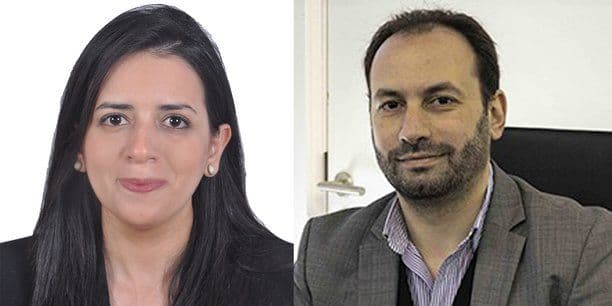
Hafsa EL BEKRI is a Lecturer-Researcher in international economics - Euromed Business School - Euromed University of Fes. Hicham SEBTI holds a PhD in Management from Université Paris-Dauphine and is Director of Euromed Business School - Euromed University of Fes.