UEMF students travel to Tel Aviv to Jamweek at Shenkar to try to solve problems related to climate change
UEMF students travel to Tel Aviv to Jamweek at Shenkar to try to solve problems related to climate change


The impact of global warming is already irreversible and environmental issues are now a strategic concern at all levels. At the current pace of population growth and intensification of industrial activities among others, major challenges must be met. In response to these concerns, Shenkar College of Engineering, Design and Art in Tel Aviv organizes annually the “JAMWEEK”, a creative Hackathon that aims to bring together students and experts to propose solutions capable of reducing CO2 emissions and limiting global warming.
This year, the 11nd th edition of JAMWEEK, which took place from February 27 to March 02, 2023, was very special as it featured the participation of about ten students from the Euromed University of Fes, who traveled to Tel Aviv to meet students from Israel, Germany and New York in order to work hand in hand and carry out a collective brainstorming. With a focus on specific regions such as the Mediterranean Sea, the Red Sea and the desert, the goal is to find ideas that promote awareness of environmental problems and propose measures to mitigate them.
Divers academic profiles from UEMF were represented: Artificial Intelligence, International Business, Management, and even Human and Social Sciences. Participants were invited to propose, in teams, solutions applicable in several areas: water pollution, biodiversity preservation, and the protection of wildlife and plant life.
Concretely, students were introduced to an environmental diagnostic session during a face-to-face exchange with experts. This immersion allowed them to grasp the overall context in order to adopt the necessary tools to aid reflection. Other coaching sessions in ideation, Design Thinking as well as in prototyping and pitching took place on site to help students further refine their projects. The winning idea will be integrated into the development plan of the study area.
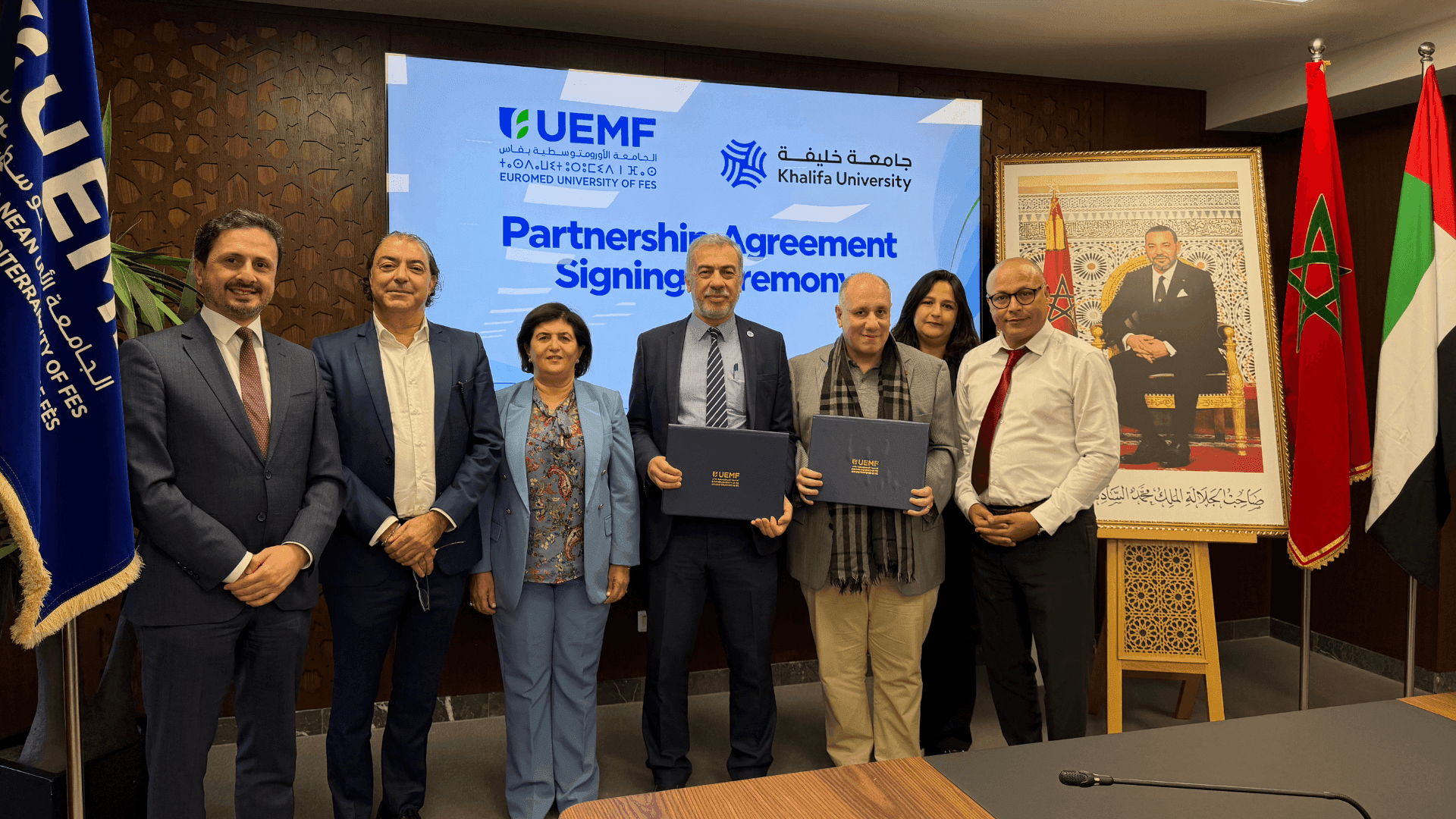
This activity follows the signing of the partnership agreement between UEMF and Shenkar College on May 30, 2022, aimed at boosting education and research-innovation by developing joint curricula and research programs on topics of common interest, including digital transition, artificial intelligence, innovative agriculture and energy as well as art and design. This cooperation also concerns the mobility of students and academic staff.