Global crises, opportunities and renewal
Global crises, opportunities and renewal
No country in the world is immune to global crises, hence the need to deploy a rational, transformational and inclusive strategy. Invisible threats or crises expose a number of dysfunctions and vulnerabilities, even weaknesses at the societal level.
It is therefore essential to consider these issues, which know no borders, as periods of transition or even rupture capable of leading States to reinvent themselves, to renew themselves by rethinking or adapting their choices, their strategies and their governance. This necessarily involves putting in place critical and engaged reflection through stages that are intrinsically linked and nourished by the interactions resulting from the processes they trigger.
In this framework, local actors have a decisive role to play in the context of any crisis management process, whatever its nature. As for organizations, it is essential that they show vigilance and be attentive to their ecosystem. Comprehensive, transparent and active communication, intra- and inter-organizational, therefore remains a crucial link in times of crisis.
Alongside the “communication” function, several complementary measures can guide organizations through periods of crisis. It is therefore appropriate to look at organizational systems and the multiple reflections on the subject.
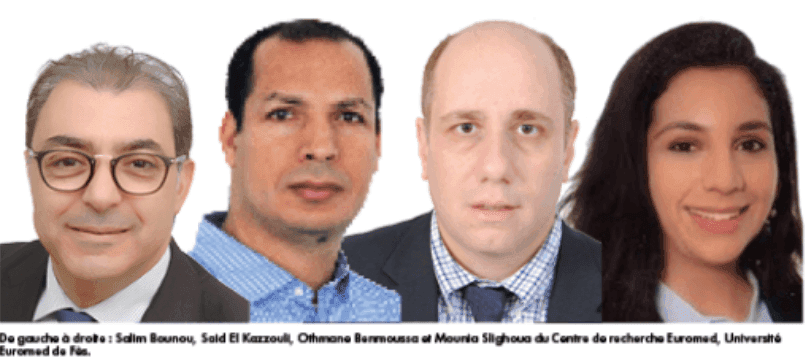
By: Salim Bounou, Said El Kazzouli, Othmane Benmoussa and Mounia Slighoua from the Euromed Research Center, Euromed University of Fes.
Read more: https://leseco.ma/crises-mondiales-opportunites-et-renouveau/