National Scientific Symposium: Politics and the Digital: Collision or Collusion?
National Scientific Symposium: Politics and the Digital: Collision or Collusion?
Conferences and Symposia
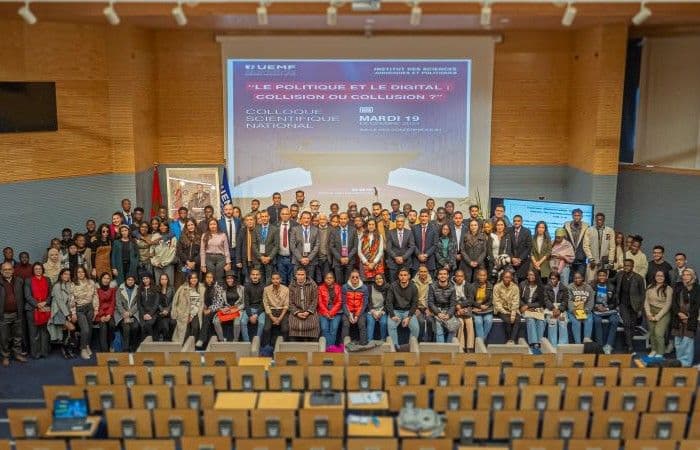
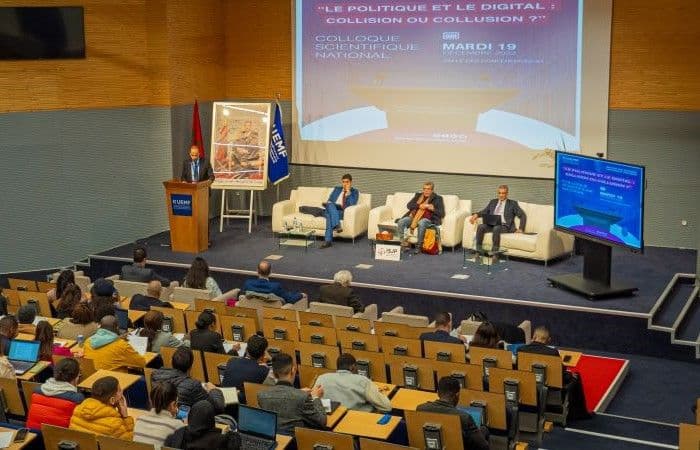
Under the theme "Politics and Digital: Collision or Collusion?", the Euromed Institute of Legal and Political Sciences (IESJP) organized an event as part of a national scientific symposium held at the Eco-campus of the Université Euromed de Fès on December 19.
The symposium aimed to bring together cross-perspectives from a plurality of involved actors, through their actions or advocacy, such as technological innovation and support for active digital citizenship. It also sought to understand how digital technology contributes to reshaping the relationship between the governed and those who govern, leading to a transformation of the traditional conception of the state and its modes of intervention (regulation).
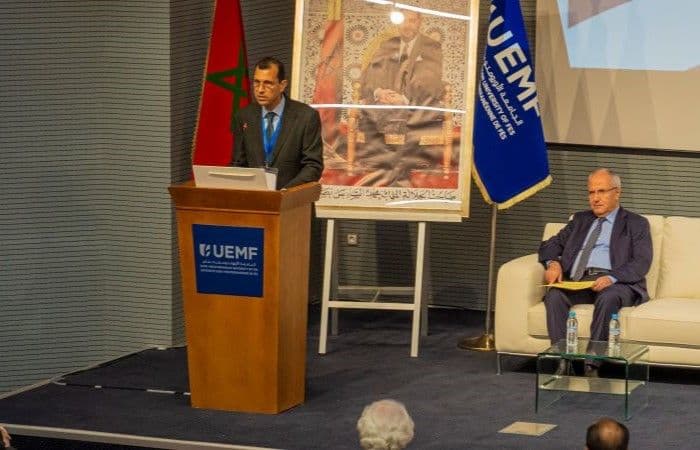
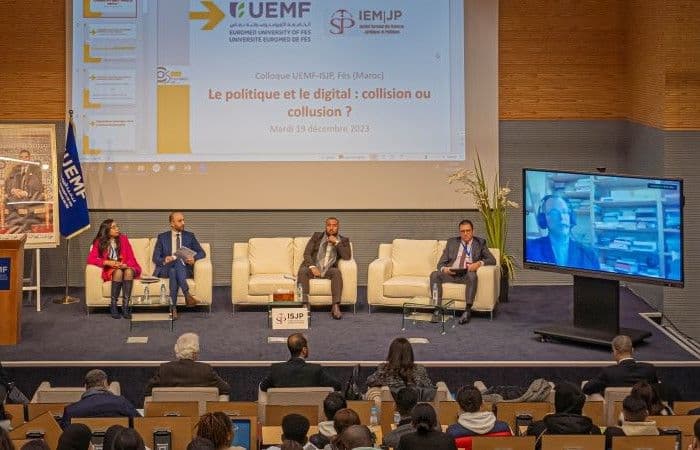
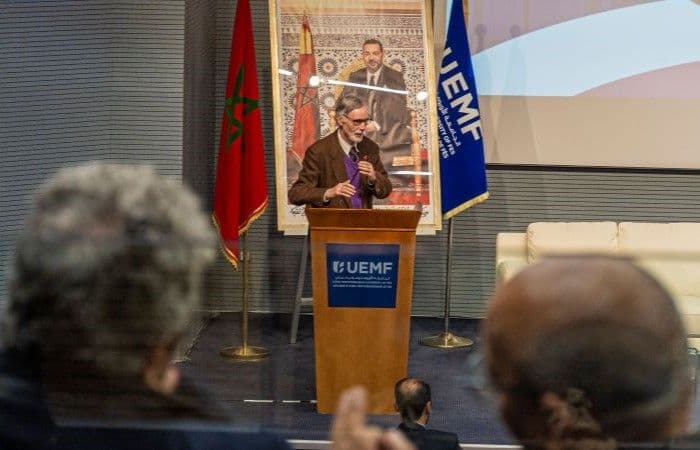
Initiated by a speech from the Director of IESJP, Prof. Abderrahmane HADDAD, and in the presence of several experts in the fields of law, politics, education, and sociology, the symposium unfolded through four sessions of fruitful sharing and debate.
The first session focused on communication challenges in the era of digitalization within the political context, moving from journalism to communication and political marketing. The second session oriented itself towards the impact of digital technology on democratic renewal, through participatory democracy and the political engagement of Moroccan youth. Politics tested by the globalized challenges of the digital world was the subject of the third session of this event; the panel explored the latest legal advancements that have emerged with the need for data protection and the rise of GAFAM. The fourth and final session centered on the governance of public policies in this new age of digitization of public administration and contracts, where experts shed light on the impact of digitalization on user reassurance, foreign investor confidence, and on the acquisition of social capital and the development of entrepreneurship.
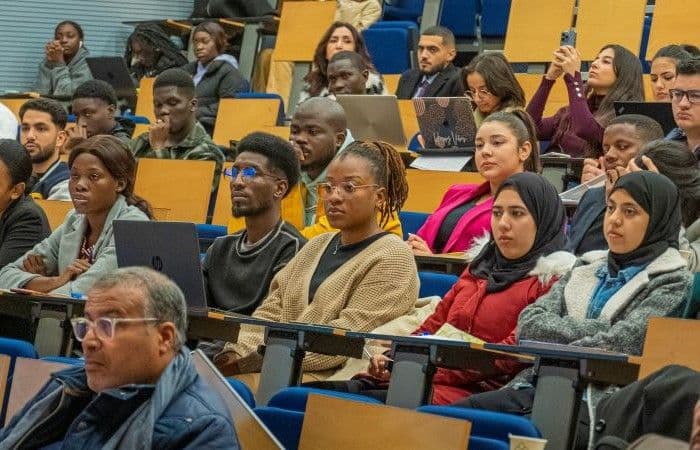
Prompted by these profound and intrinsically linked dynamics between the digital and the political, the researchers explored during this meeting the various facets of this major issue which occupies an increasing number of public and private spheres. It was a genuine opportunity for constructive exchange and informed debate between experts, the university's teacher-researchers, and students.

![[Call for Applications] Erasmus+ Mobility Scholarships at the University of Cordoba in Spain](/_next/image?url=https%3A%2F%2Fbackend.ueuromed.org%2Fuploads%2Ftemp_polytechnique_b74db3259b.jpg&w=3840&q=75)
![[Call for Applications] Erasmus+ Mobility Scholarships at Parthenope University of Naples in Italy](/_next/image?url=https%3A%2F%2Fbackend.ueuromed.org%2Fuploads%2Ftemp_polytechnique_57a112e81b.jpg&w=3840&q=75)
![[Call for Applications] Erasmus+ Mobility Scholarships at Mykolo Romeris University of Rokiškis in Lithuania](/_next/image?url=https%3A%2F%2Fbackend.ueuromed.org%2Fuploads%2Ftemp_polytechnique_a849c203d3.jpg&w=3840&q=75)
![[Call for Applications] Erasmus+ Mobility Scholarship at Parthenope University of Naples in Italy](/_next/image?url=https%3A%2F%2Fbackend.ueuromed.org%2Fuploads%2Ftemp_polytechnique_00137804a0.jpg&w=3840&q=75)