Défense de Thèse de Doctorat en Intelligence Artificielle par Mr. Kaloma Usman MAJIKUMNA
Défense de Thèse de Doctorat en Intelligence Artificielle par Mr. Kaloma Usman MAJIKUMNA
CEDOC
The Euromed University of Fes (UEMF) is pleased to inform the public of
the doctoral thesis defense in ” Artificial Intelligence ”
The thesis defense will take place on Saturday, October 11, 2025, at 10:00 am at l’UEMF
Location: The Great Hall of the Incubator (LOC001994)
The thesis will be presented by Mr. Kaloma Usman MAJIKUMNA
under the topic :
“ PLANT SURVIVAL AND DISEASES RISKS MANAGEMENT UNDER DROUGHT STRESS USING ARTIFICIAL INTELLIGENCE: THE CASE OF OLIVE TREES IN MOROCCO ”
Summary
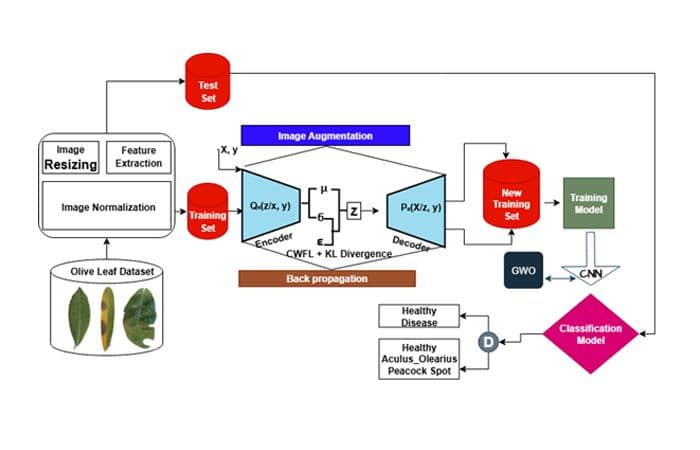
Olive tree cultivation in the Mediterranean region is increasingly threatened by climate change, particularly the intensification of drought stress. Despite their reputation for drought resilience, olive trees are now exhibiting vulnerabilities due to rising temperatures and reduced precipitation. To address this challenge, this research integrates AI, satellite-based monitoring, deep learning for disease detection, and field experimentation to develop advanced methods for improving plant survival and disease management. To analyze the impact of climate variability on olive cultivation, Sentinel-2 satellite imagery and AI techniques were employed to assess land use and land cover changes between 2018 and 2023. Advanced machine learning algorithms were used for classification, with Random Forest (RF) achieving the best performance. The analysis revealed a peak in olive cultivation area in 2020, followed by a decline, which correlated strongly with rainfall patterns, suggesting the influence of climatic and resource-based constraints. In the context of disease monitoring, a novel deep learning model, FLVAEGWO-CNN, was developed to improve classification performance in imbalanced olive disease datasets. By integrating Focal Loss, Variational Autoencoders, Grey Wolf Optimization, and Convolutional Neural Networks, the model achieved 99.2% accuracy in binary classification and demonstrated excellent performance on minority classes, providing a scalable tool for precision disease management. Lastly, a field experiment was conducted on 80 young olive trees from three varieties (Haouzia, Menara, and Languedoc) under four irrigation regimes (100%, 50%, 25%, and 0% evapotranspiration). Results showed that the Languedoc variety had the highest resilience under stress, and trunk diameter was identified as the most reliable predictor of drought response. Yield differences were statistically significant between full and deficit irrigation treatments, supporting the use of optimized deficit irrigation strategies. Overall, this research demonstrates the value of combining AI, remote sensing, and field-based analysis to enhance drought resilience and disease control in olive trees. The findings offer practical recommendations for sustainable cultivation and risk mitigation in drought-prone regions.
This thesis will be presented to the jury members:
| Full name | Grade | Institution | Quality |
|---|---|---|---|
| Prof. Chakib ALAOUI | Associate Professor | Euromed University of Fes | Jury Chair |
| Prof. Zerhoune MESSAOUDI | Full Professor | National School of Agriculture, ENA Meknès | Reviewer |
| Prof. Omar ELOUTASSI | Full Professor | Faculty of Sciences, Moulay Ismail University, Meknès | Reviewer |
| Prof. Nabil EL AKKAD | Associate Professor | Sidi Mohamed Ben Abdellah University, USMBA | Reviewer |
| Prof. Mohammed OUANAN | Full Professor | Faculty of Sciences, Moulay Ismail University, Meknès | Examiner |
| Prof. Abdelghafour MARFAK | Full Professor | Euromed University of Fes | Examiner |
| Prof. Mhamed ZINEDDINE | Assistant Professor | Euromed University of Fes | Thesis Co-director |
| Prof. Ahmed EL HILALI ALAOUI | Full Professor | Euromed University of Fes | Thesis Director |