Governance
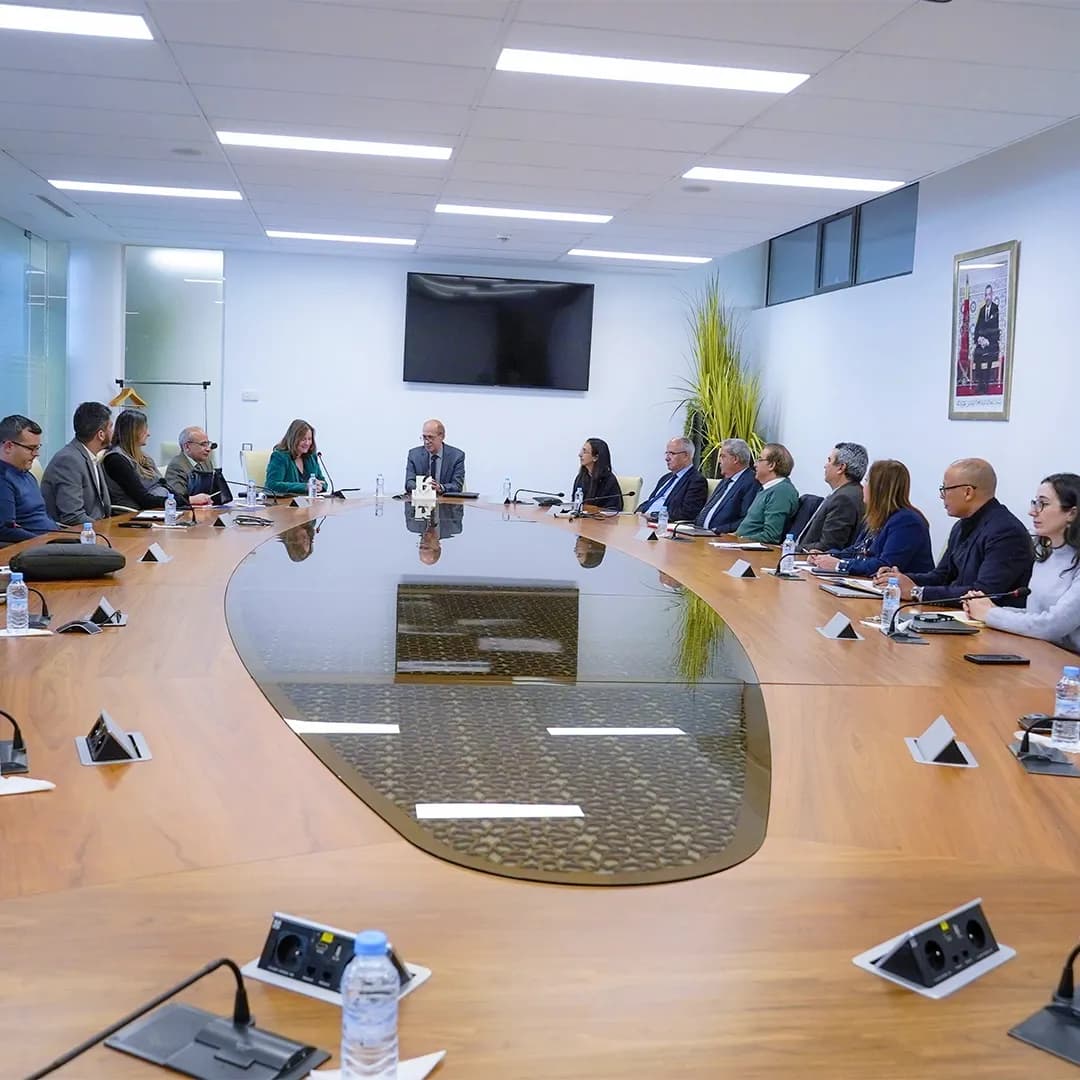
Euromed University of Fes relies on a modern, inclusive, and strategic governance, built around influential figures from the academic, institutional, and socio-economic spheres.
Structured bodies to manage Euromed University of Fes
Euromed University of Fes is built on a structured and participatory governance, driven by bodies committed to steering its development, guaranteeing its transparency, and fulfilling its mission of academic, scientific, and societal excellence.
General Assembly
The sovereign body that validates the major strategic directions, budgets, and statutory developments of the University.
Board of Directors (COSD)
The governing body that sets the University's major strategic directions and oversees its development.
The Chancellor
A leading figure and the institutional guarantor of UEMF, he chairs the strategic bodies.
The President
Bears the vision of the Euromed University of Fes, directs the governing bodies, supervises operations, and represents the university.
University Council
The central academic body responsible for degrees, programs, and major educational decisions.
Scientific Committee
Advisory body composed of experts to evaluate the relevance of academic programs and scientific performance.
Coordination Committee
A cross-functional body that ensures synergy between the entities, projects, and internal structures of Euromed University of Fes.
Management Committee
A limited team that makes day-to-day management decisions on projects, budgets, and internal priorities.
Principles and Values of Governance
At UEMF, governance is based on fundamental principles that guide all of the university's actions, both in its academic mission and in its daily operations. These values guide its commitment to a more just, equitable, and open society.
Our Institutions by Academic Division The Euromed University of Fes is structured around four Academic Divisions, each dedicated to a specific field of knowledge and skills. This organization allows for the creation of strong, interdisciplinary identities and promotes the emergence of innovative teaching and research projects.
Openness to the world, inclusion, tolerance, interculturality, and sharing
Non-discrimination based on origin, gender, disability, family situation, or belief
Equal opportunities and chances for all
Proactive policy for gender equality and the inclusion of people with reduced faculties
Recognition of excellence through assessments at all levels
Promotion of critical thinking, citizenship, civility, and respect for the environment.
Promoting innovation, initiative, entrepreneurship, and the mastery of languages and cultures.
A demonstrated social responsibility through the granting of scholarships to high-achieving students from underprivileged backgrounds or from sub-Saharan African countries.