Sustainable Landscape Strategies and Experiential Agrotourism in Moroccan Rural Villages
Sustainable Landscape Strategies and Experiential Agrotourism in Moroccan Rural Villages
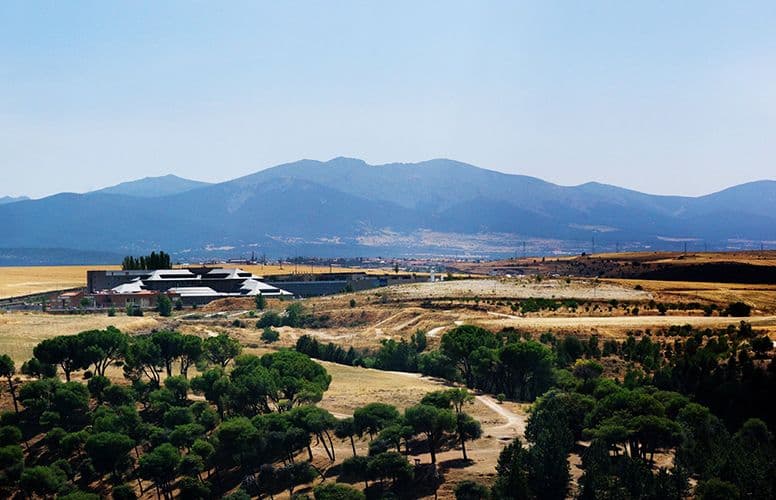
Moroccan rural villages, particularly Dar El Hamra and Aïn Leuh (Fès–Meknès region), as well as high-altitude villages of the Rif and Beni Snassen (Tafoughalt), are characterized by a strong interconnection between vernacular housing, agricultural landscapes, and ecological structures. Their spatial organization relies on complex landscape systems combining cultivated land, pastoral routes, hydraulic networks, collective spaces, and built forms, resulting in a finely balanced relationship between environment, production, and local lifestyles.
The recent development of rural and experiential tourism, including Agrotourism practices, has introduced new landscape uses such as discovery routes, tourism-oriented agricultural activities, dispersed accommodation, and valorization of local products. These practices, often concentrated during specific seasons, generate seasonal pressure on agricultural landscapes, soils, resources, and village spatial structures. In the absence of adapted planning tools, these dynamics risk fragmenting landscapes and weakening traditional relationships between habitation, production, and environment.
In this context, landscape architecture emerges as a central lever for integrating experiential Agrotourism at the scale of villages and their territories. Moving beyond a building-centered approach, this research investigates landscape continuities, gradients of use, and the carrying capacities of agricultural and natural spaces. The aim is not merely to adapt buildings, but to structure landscape systems capable of absorbing temporary tourist uses without disrupting existing balances.
Aligned with national priorities for rural tourism development promoted by the Ministry of Tourism, Handicrafts and Social and Solidarity Economy, this PhD research mobilizes spatial, behavioral, and digital tools to evaluate landscape and architectural carrying capacities, analyze interactions between agriculture, tourism, and habitat, and propose adaptive planning and reuse strategies grounded in landscape architecture.
Research Environment
Candidates are expected to carry out their research full-time within the structures of the Euromed University of Fes.
PhD Student’s Responsibilities
- Analyzing relationships between vernacular housing, agricultural landscapes, and tourist uses in rural villages.
- Studying landscape structures such as agricultural parcels, terraces, pastoral routes, hydraulic systems, and collective spaces.
- Observing rural and agrotourism practices, including dispersed accommodation, agricultural activities, and landscape itineraries.
- Conducting qualitative surveys with residents, farmers, and visitors, with particular attention to peak seasonal periods.
- Evaluating seasonal pressures on landscapes and spatial systems.
- Developing landscape and architectural planning scenarios at the village scale.
- Proposing principles for managing tourist uses in harmony with agricultural cycles and environmental constraints.
- Contributing to adaptive reuse and landscape-based strategies that support sustainable rural tourism.
Candidate Profile
The position is open to an architect urbanist with a strong interest in rural territories, agricultural landscapes, and vernacular architecture.
Desired skills include applied spatial analysis (GIS, spatial modeling, data analysis, simulation tools) and the ability to conduct field-based research. Sensitivity to landscape systems and community-based rural development is essential.The application file must include the following documents:
- CV with photo
- Cover letter
- Copy of diplomas
- Copy of academic transcripts
- Copy of CIN/Passport
Submission of the Application File
The application file must be sent to the Doctoral Studies Center (CEDoc) of the Euro-Mediterranean University of Fes by email
no later than February 14, 2026 to the following address:
Euromed-CEDoc@ueuromed.org
For More Information
Administrative Affairs Officer of the CEDoc:
Ms. Boutaina Jai Mansouri –
b.jai-mansouri@emadu.ueuromed.org
Director of Research and of the CEDoc:
Prof. Abdelghafour Marfak –
a.marfak@euromed.org
Thesis Supervisor
Prof. Wafae Belarbi