Perception of Safety and Spatial Appropriation in Moroccan Historic Centers: An Architectural and Tourism-Based Gender Approach
Perception of Safety and Spatial Appropriation in Moroccan Historic Centers: An Architectural and Tourism-Based Gender Approach
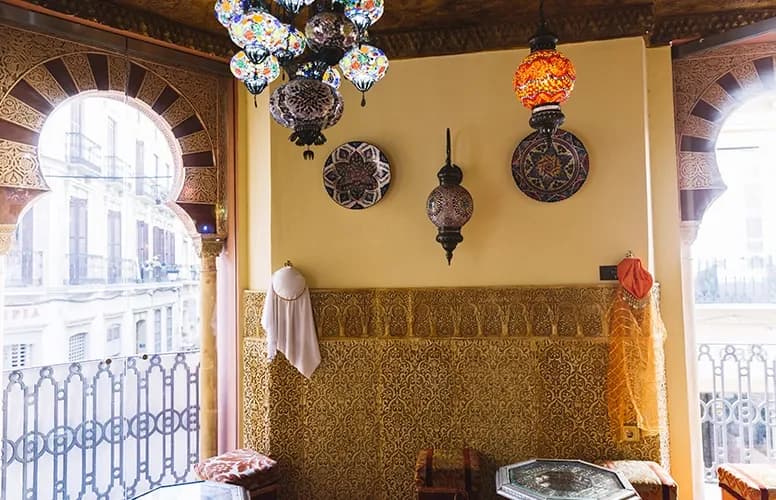
Moroccan historic centers and medinas (Fez, Marrakech, Rabat, Tetouan ...) constitute exceptional urban heritage sites and major destinations for cultural and experiential tourism. These environments are characterized by narrow streets, labyrinthine layouts, semi-public spaces (Fondouks, Souks, Squares), and strong functional diversity.
However, these complex architectural and urban configurations significantly influence the perception of safety, which varies according to gender, time of day, and type of tourism. Spatial morphology, lighting conditions, visibility, and transitional spaces can generate feelings of comfort or vulnerability, shaping how different users appropriate and navigate these environments.
This PhD project explores how architectural and urban characteristics of Moroccan medinas shape gender-differentiated perceptions of safety, and how artificial intelligence tools can contribute to analyzing, predicting, and improving spatial and touristic experiences in heritage contexts. By combining architectural analysis, behavioral observation, and AI-based modeling, the research aims to support more inclusive, safe, and sustainable management of historic centers without compromising their heritage value.
Research Environment
Candidates are expected to carry out their research full-time within the structures of the Euromed University of Fes.
PhD Student’s Responsibilities
- Mapping streets, squares, passages, and transitional spaces in selected historic centers and medinas
- Analyzing pedestrian flows and identifying potential risk or vulnerability zones.
- Conducting behavioral observations to study trajectories, pauses, avoidance, and regrouping patterns among visitors.
- Collecting and analyzing data on perceived safety according to gender, time of day, and touristic use.
- Applying machine learning techniques to identify patterns in perceived safety and spatial behavior.
- Correlating morphological parameters (street width, visibility, lighting, spatial continuity) with safety perception data.
- Producing vulnerability and safety maps under different urban and lighting scenarios.
- Contributing to architectural and urban recommendations aimed at improving inclusivity, safety, and responsible tourism in heritage contexts.
Candidate Profile
- The position is open to an architect or architectural engineer with a strong interest in cultural heritage and gender-related spatial issues.
- Desired skills include urban and architectural diagnostics, social and behavioral studies, and an interest in digital or AI-based analytical tools.
- Sensitivity to inclusive design and heritage preservation is essential.
The application file must include the following documents:
- CV with photo
- Cover letter
- Copy of diplomas
- Copy of academic transcripts
- Copy of CIN/Passport
Submission of the Application File
The application file must be sent to the Doctoral Studies Center (CEDoc) of the Euro-Mediterranean University of Fes by email no later than February 14, 2026 to the following address:
Euromed-CEDoc@ueuromed.org
For More Information
Administrative Affairs Officer of the CEDoc:
Ms. Boutaina Jai Mansouri – b.jai-mansouri@emadu.ueuromed.org
Director of Research and of the CEDoc:
Prof. Abdelghafour Marfak – a.marfak@euromed.org
Thesis Supervisor
Prof. Wafae Belarbi